Job opportunities in the different media sectors
Whilst applying for any job within the Creative Media Sector there are different contract types to be aware of. These exist as many companies will require many different staff all working as full time, part time, freelance or piece work depending on the nature of their job.
There are lots of advantages and disadvantages to working for a boss and working for yourself, however it really is down to your personal preference as to which contract and style of work suits you. Different types of job will come with different contracts, and often when starting out in the media industry you will take any type of work available to you, which will often begin as a runner. Many people feel more comfortable with working for a company, yet others enjoy the freedom of choosing who they work for and when.
Contract styles
Full time contract
Full-time employment is a form of employment where a person will work a set minimum amount of hours which are stated as such by the employer. This will often come with a few benefits which aren't typically offered to other employment styles such as part-time, temporary, or flexible. These perks can include annual leave, sick pay, health insurance and holiday pay.
Part time contract
This is an employment type which requires fewer hours per week as opposed to a full-time job. You will often work in shifts but remain on call when not on duty and sometimes during leave, meaning they can be called into work at any time if needed. These shifts can be rotational, meaning that employees can swap hours with other employees if appropriate, and the shifts are not set as specific days each week. To be classed as part-time, you will mainly work fewer than 30 or 35 hours each week.
Freelance
Hourly Paid
Piece work
This style of pay is where someone will be given a set job, and they will be payed for this job with no relation to how long the job may take or other factors like that. This can apply to people who work on films making props, as they will be payed just for the prop. Also, someone may be paid for the entire film as piece work, and this pay will depend on how well the film does in the box office etc and this will have a knock on effect on the money paid for the piece.
Job opportunities available within the film sector
Director
Directors are mainly responsible for the creation of films, television, adverts and many other types of recorded pieces. They will work with a large production team, which will include the full crew and the cast if a live action piece. They are in charge, and must instruct all of the crew on what they need to be doing and where they need to be. The main skills that a director will need to constantly use include creativity, organizational skills and technical knowledge, they must manage the whole production process.
As a director your work could but is not limited to include:
- Meeting with and also cooperating with people such as producers
- Commissioning scripts or ideas,
- Interpreting scripts and from this creating storyboards
- Deciding how the piece will look
- Deciding where it should be filmed
- Creating a full plan for the shoot which may include a schedule and logistics
- Hiring cast and crew
- Directing actors
- Supervising editing
Producer
This is often considered a very well respected career within the film industry. Producers are essentially the big boss of every element going on throughout creating a piece of media. They work closely with directors and all other production staff on the full creation, often with some help from production assistants, coordinators and sometimes managers; this will all depend on the size of the production.
A producers tasks include:- Working closely with script writers and directors with researching, reading and deciding on ideas and the finished scripts
- Commissioning writers and ensuring the copyright to novels, plays, screenplays
- Creating a network of contacts
- Using the right software needed for screenwriting, budgets and schedules
- Hire the necessary staff such as a director and a camera crew to create the media
- Being aware of and maintaining technical skills
- Assessing all risks involved
- Ensuring all health and safety guidelines and codes of conduct are followed
- Ensuring everything is kept on task and to the schedule
- Holding meetings often with the director and other crew members to discuss the production
- Ensuring everything stays on budget
- Raising and controlling funding
Camera operator
Depending on the type of piece being filmed, a camera operator could be working in many different environments which could include a studio, somewhere outdoors, a public space such as a park, city etc. Standard job activities can include:
- Putting together, preparing and setting up equipment needed for filming. This equipment can include tripods, lighting, monitors, cables, headphones etc.
- Offering advice to the director on the best way to shoot a scene
- Planning some shots in depth
- Practicing camera movements for pre-arranged shots
- Studying the scripts in detail to understand how they need to be filmed
- Finding solutions to technical and practical problems
- Working to a time scale and managing their time
- Keeping in the know with filming methods and new equipment
- Repairing/maintaining equipment as and when it's needed
- Carrying out risk assessments and being aware of health and safety issues
- Transporting the equipment to and from the shoot
Professional behaviour needed when working in the film sector
Reliability
It is important to be reliable as it will ensure you keep getting employed and keep your job. To be reliable, you must honour all your commitments and stay professional at all times.Attendance and punctuality
You can not miss days of work that are highly important, if you are a camera operator and you do not turn up to work on the day of a shoot it is very unlikely you will get another job within the media industry as word travels very fast.Commitment
You must have absolute commitment to your job, you must be where you are needed and be committed to work above and beyond what might have originally been stated as the film sector can be unreliable with things such as time scales.Efficiency
You must get everything done to the agreed time scale and get it done as well and to the best quality possible to ensure your employer is kept happy.Self-presentation
You must be well presented every day, to ensure you look professional and ready to work.Communication skill
You must be able to communicate with everybody you are working with to ensure everything is understand and also to keep a good sense of rapport amongst colleagues.
Contribution to team projects
Contribution to team projects
You need to work well with everyone, and this may include doing team projects along side your usual work.
Time management
This is really important to ensure everything is done as and when it needs to be to ensure everything runs smoothly and is kept to a schedule, one little job taking longer than needed could cost a lot of money.
Personal responsibility
You must be able to take responsibility for your own workload but also your own actions and face consequences if you have done anything wrong.
Portfolio and CV
Job application
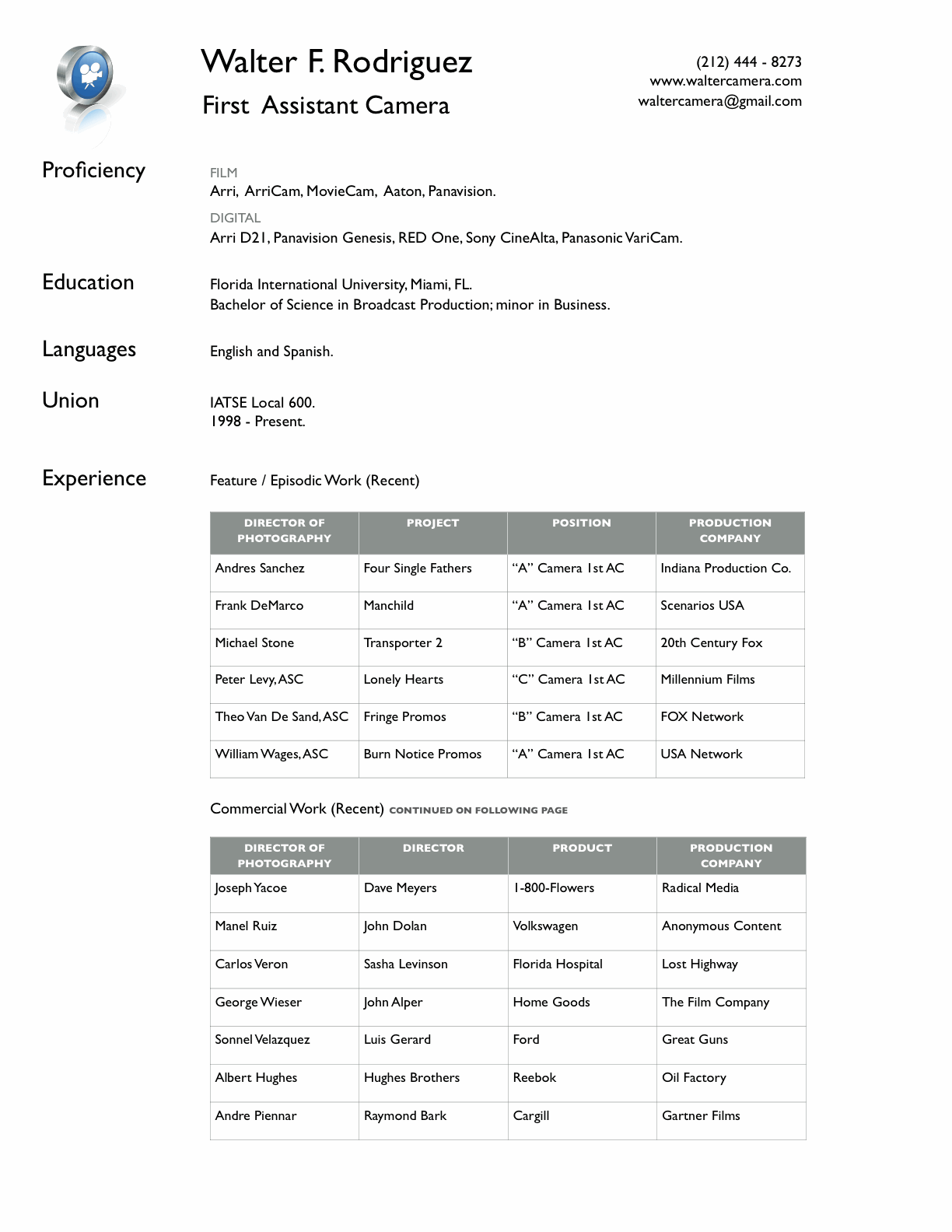
Most jobs will be applied for using an application form. A lot of employers within the creative media sector will also want a portfolio of your work too.Here is an example of an application form for an application to be a Camera Assistant.
 |
| (Source: http://www.cameraassistant.com/images/Walter%20F.%20Rodriguez%20-%201st%20Assistant%20Camera%20-%20Resume.gif) |
The applicant will state all previous work done, and also their education and a few personal details.