I used this song: https://www.youtube.com/watch?v=isVIdl92AK8
I chose to do a music video that followed a story line.
Here is the link to my video: https://vimeo.com/141045011
For the planning and creation of this video, please see: http://creativemediaassignment1.blogspot.co.uk/2014/12/production-diary-for-1-minute-film.html
Thursday, 1 October 2015

Radio
Despite being one of the oldest forms of mass media, the radio industry employs 22,000 people in the UK. Radio is most used now in cars yet is still found used on standalone radio devices, however since becoming digital radio can also be played on TVs. Radio can be split into three sections:
These are typically a formal type of speech package and tend to be straight forward and unbiased. There purpose are to provide in-depth information on current news. Including information and current affairs. Some are short and sweet programmes slotted inbetween other programmes with a brief outline of current affairs, often reading out current headlines that are relevant to the area of the target audience. Some are longer and go into more detail with interviews on the matters as well as the information.
This is an example of one News Package:
Name of Station: BBC News
Name of Show: BBC minute
Target Audience: Adults
Genre: News
Style of programme: Formal
Factual Packages
These can be formal or informal. Ranging from a programme in the style of discussion, magazine, music sequence, documentary or investigative. Their purpose is to inform but also in many cases to entertain as they can be a bit more adventurous with the sound effects and actuality included to really tell a story and create an image for the audience.
Name of Show: Thirty Years Man and Boy - A calmer Chameleon
Target Audience: Boy George fans
Genre: Documentary
Style of programme: informal
Name of Station: BBC Radio 1
Name of Show: Big Weekend Special with Dan, Phil, Jack and Dean!
Target Audience: Teens and young adults
Genre: Entertainment
Style of programme: Informal as it is meant to entertain
- Radio that is funded publicly which is the BBC channels. James Heath, the Policy Director for the BBC said, "The schedules of our radio services are far more diverse than those of commercial stations. As an example, in a typical week, Radio 1 plays 325 different songs in daytime, compared to 140 on Capital FM. Across a month (all hours), Radio 1 plays over 3,200 different tracks – compared to around 200 a month on Capital." Through the money taken from the licence fee, the BBC feel this allows them the ability to provide a greater service to the public; in this case they feel they play a larger amount and a better variety of songs than radio stations that are funded by adverts. The BBC provide all these radio stations through the payment of the licence fee:


http://www.tvlicensing.co.uk/check-if-you-need-one/topics/what-does-your-licence-fee-pay-for-top13
- Commercial Radio, which is funded by adverts, such as Capital. The majority of commercial stations serve as local/regional and are owned by one of the 3 dominating companies in the sector; Global (Heart, Galaxy, Gold, Xfm, Smooth Radio and Real Radio), Bauer (Absolute Radio, Kiss and Magic) and UTV (talkSPORT). There are over 300 Commercial Radio stations in the UK, which mostly use FM and DAB frequencies. As well as regional channels, there is also 3 National Commercial Radio stations which are broadcast throughout the UK on either FM or AM, DAB, DTV and online; Classic FM playing only classical music, Absolute Radio featuring rock and pop and talkSPORT which is made up of live sport and debate.
- Voluntary Radio which is often a great way to get some training in broadcasting. Community Radio stations are small and provide training and opportunities for people of all ages wanting to be involved with radio and broadcasting locally. Community stations are often limited to an area within a 5 kilometre radius in which they can broadcast. They are not allowed to raise over 50% of their operating costs from any single source (this includes advertising) and the rest of the costs needed to run the station must me found from other sources. Hospital Radio is broadcast specifically for the patients of hospitals, it is delivered through bedside units or over the internet. Patients in the hospitals will benefit from this as volunteers trained by the station will often go out into the hospital wards to discuss what music the patient would most like to hear and sometimes even interview them. A lot of now professional radio presenters will of volunteered for hospital radio early on in their career as it works as a training ground for budding broadcasters. Famous and successful broadcasters who began in hospital radio include: Chris Moyles, Scott Mills and Karl Pilkington. Student Radio will broadcast from any place of education, this could be a college or university. Often, programming will be exclusively carried out by the students but can also include individuals from the wider community. These stations will offer a variety of programming, this includes local news, campus sports news, spoken word programmes and music. These stations will also provide airplay and promotion to up and coming local artists.
Speech programming
News PackagesThese are typically a formal type of speech package and tend to be straight forward and unbiased. There purpose are to provide in-depth information on current news. Including information and current affairs. Some are short and sweet programmes slotted inbetween other programmes with a brief outline of current affairs, often reading out current headlines that are relevant to the area of the target audience. Some are longer and go into more detail with interviews on the matters as well as the information.
This is an example of one News Package:
Name of Show: BBC minute
Target Audience: Adults
Genre: News
Style of programme: Formal
Structure of programme: Begins with introducing presenters and then goes on to the two presenters taking turns reading out various news headlines with a very brief description and some contributing sound effects in the background to create an image for listeners.
Contributors: Two News presenters, some inputs from bigger interviews.
Legal/ethical considerations: Must be unbiased, just inform people of the news rather than discuss it as it is to be straight forward and being biased towards anything can cause offense and result in having many complaints. Be aware of the target audience if any sensitive topics are to be mentioned by warning people beforehand. Should be relevant to the Geodemographics.
Contributors: Two News presenters, some inputs from bigger interviews.
Legal/ethical considerations: Must be unbiased, just inform people of the news rather than discuss it as it is to be straight forward and being biased towards anything can cause offense and result in having many complaints. Be aware of the target audience if any sensitive topics are to be mentioned by warning people beforehand. Should be relevant to the Geodemographics.
Factual Packages
These can be formal or informal. Ranging from a programme in the style of discussion, magazine, music sequence, documentary or investigative. Their purpose is to inform but also in many cases to entertain as they can be a bit more adventurous with the sound effects and actuality included to really tell a story and create an image for the audience.
Target Audience: Boy George fans
Genre: Documentary
Style of programme: informal
Structure of programme: Separated from previous section with the station jingle and introducing presenter. If they talk about a particular song they leave it to play for a while then continue to talk while it quietly plays in the background. The story is told through interviews with various people who have experience with Boy George. Everyone is introduced when speaking apart from Boy George himself.
Contributors: Any legal/ethical considerations: Don't mention personal details of the people they are interviewing.
Contributors: Any legal/ethical considerations: Don't mention personal details of the people they are interviewing.
Name of Show: Big Weekend Special with Dan, Phil, Jack and Dean!
Target Audience: Teens and young adults
Genre: Entertainment
Style of programme: Informal as it is meant to entertain
Structure of programme: Has Jingle as introduction then introduces where it is and the presenters. There is a narrator introducing who will be talking in the package with a music beds and clips of the presenters talking.
Contributors: Presenters Dan, Phil, Jack and Dean and Snoop Dog as guest
Any legal/ethical considerations: Need to be aware of their audience so they dont say something offensive while joking on.
Contributors: Presenters Dan, Phil, Jack and Dean and Snoop Dog as guest
Any legal/ethical considerations: Need to be aware of their audience so they dont say something offensive while joking on.
Name of Station: BBC Radio 4
Name of Show: 23 Amazing Reasons this Radio Programme will change your life.
Target Audience: Adults as it keeps stopping tand explaining what terms in social media mean.
Genre: Documentary
Style of programme: Informal
Name of Show: 23 Amazing Reasons this Radio Programme will change your life.
Target Audience: Adults as it keeps stopping tand explaining what terms in social media mean.
Genre: Documentary
Style of programme: Informal
Structure of programme: Jingle. Introduction includes the presenter trying to get the point across about catching peoples attention in the first 7 seconds but explains that this documentary is about that. Cuts to a cluster of overlapping headlines that you would see online on a daily basis. Every now and then the producer steps in to stop the presenter as a staged peice to explain terms that people may not understand.
Contributors: Presenter speaking about the topic. Producer steps in to cue the presenter to explain terms that listeners may not understand. Other guests to contribute about the topic.
Any legal/ethical considerations: Must be aware when reading out headlines that they are suitable to say on air.
Contributors: Presenter speaking about the topic. Producer steps in to cue the presenter to explain terms that listeners may not understand. Other guests to contribute about the topic.
Any legal/ethical considerations: Must be aware when reading out headlines that they are suitable to say on air.
Target audience shapes the sound of a speech package as when creating a radio show they will need to be aware of their audience, they need to talk about things relevant to that audience and use terms they understand.
Wednesday, 9 September 2015
Understanding Media - Job Opportunities
Job opportunities in the different media sectors
Whilst applying for any job within the Creative Media Sector there are different contract types to be aware of. These exist as many companies will require many different staff all working as full time, part time, freelance or piece work depending on the nature of their job.
There are lots of advantages and disadvantages to working for a boss and working for yourself, however it really is down to your personal preference as to which contract and style of work suits you. Different types of job will come with different contracts, and often when starting out in the media industry you will take any type of work available to you, which will often begin as a runner. Many people feel more comfortable with working for a company, yet others enjoy the freedom of choosing who they work for and when.
Contract styles
Full time contract
Full-time employment is a form of employment where a person will work a set minimum amount of hours which are stated as such by the employer. This will often come with a few benefits which aren't typically offered to other employment styles such as part-time, temporary, or flexible. These perks can include annual leave, sick pay, health insurance and holiday pay.
Part time contract
This is an employment type which requires fewer hours per week as opposed to a full-time job. You will often work in shifts but remain on call when not on duty and sometimes during leave, meaning they can be called into work at any time if needed. These shifts can be rotational, meaning that employees can swap hours with other employees if appropriate, and the shifts are not set as specific days each week. To be classed as part-time, you will mainly work fewer than 30 or 35 hours each week.
Freelance
Hourly Paid
Piece work
This style of pay is where someone will be given a set job, and they will be payed for this job with no relation to how long the job may take or other factors like that. This can apply to people who work on films making props, as they will be payed just for the prop. Also, someone may be paid for the entire film as piece work, and this pay will depend on how well the film does in the box office etc and this will have a knock on effect on the money paid for the piece.
Job opportunities available within the film sector
Director
Directors are mainly responsible for the creation of films, television, adverts and many other types of recorded pieces. They will work with a large production team, which will include the full crew and the cast if a live action piece. They are in charge, and must instruct all of the crew on what they need to be doing and where they need to be. The main skills that a director will need to constantly use include creativity, organizational skills and technical knowledge, they must manage the whole production process.
As a director your work could but is not limited to include:
- Meeting with and also cooperating with people such as producers
- Commissioning scripts or ideas,
- Interpreting scripts and from this creating storyboards
- Deciding how the piece will look
- Deciding where it should be filmed
- Creating a full plan for the shoot which may include a schedule and logistics
- Hiring cast and crew
- Directing actors
- Supervising editing
Producer
This is often considered a very well respected career within the film industry. Producers are essentially the big boss of every element going on throughout creating a piece of media. They work closely with directors and all other production staff on the full creation, often with some help from production assistants, coordinators and sometimes managers; this will all depend on the size of the production.
A producers tasks include:- Working closely with script writers and directors with researching, reading and deciding on ideas and the finished scripts
- Commissioning writers and ensuring the copyright to novels, plays, screenplays
- Creating a network of contacts
- Using the right software needed for screenwriting, budgets and schedules
- Hire the necessary staff such as a director and a camera crew to create the media
- Being aware of and maintaining technical skills
- Assessing all risks involved
- Ensuring all health and safety guidelines and codes of conduct are followed
- Ensuring everything is kept on task and to the schedule
- Holding meetings often with the director and other crew members to discuss the production
- Ensuring everything stays on budget
- Raising and controlling funding
Camera operator
Depending on the type of piece being filmed, a camera operator could be working in many different environments which could include a studio, somewhere outdoors, a public space such as a park, city etc. Standard job activities can include:
- Putting together, preparing and setting up equipment needed for filming. This equipment can include tripods, lighting, monitors, cables, headphones etc.
- Offering advice to the director on the best way to shoot a scene
- Planning some shots in depth
- Practicing camera movements for pre-arranged shots
- Studying the scripts in detail to understand how they need to be filmed
- Finding solutions to technical and practical problems
- Working to a time scale and managing their time
- Keeping in the know with filming methods and new equipment
- Repairing/maintaining equipment as and when it's needed
- Carrying out risk assessments and being aware of health and safety issues
- Transporting the equipment to and from the shoot
Professional behaviour needed when working in the film sector
Reliability
It is important to be reliable as it will ensure you keep getting employed and keep your job. To be reliable, you must honour all your commitments and stay professional at all times.Attendance and punctuality
You can not miss days of work that are highly important, if you are a camera operator and you do not turn up to work on the day of a shoot it is very unlikely you will get another job within the media industry as word travels very fast.Commitment
You must have absolute commitment to your job, you must be where you are needed and be committed to work above and beyond what might have originally been stated as the film sector can be unreliable with things such as time scales.Efficiency
You must get everything done to the agreed time scale and get it done as well and to the best quality possible to ensure your employer is kept happy.Self-presentation
You must be well presented every day, to ensure you look professional and ready to work.Communication skill
You must be able to communicate with everybody you are working with to ensure everything is understand and also to keep a good sense of rapport amongst colleagues.
Contribution to team projects
Contribution to team projects
You need to work well with everyone, and this may include doing team projects along side your usual work.
Time management
This is really important to ensure everything is done as and when it needs to be to ensure everything runs smoothly and is kept to a schedule, one little job taking longer than needed could cost a lot of money.
Personal responsibility
You must be able to take responsibility for your own workload but also your own actions and face consequences if you have done anything wrong.
Portfolio and CV
Job application
Most jobs will be applied for using an application form. A lot of employers within the creative media sector will also want a portfolio of your work too.Here is an example of an application form for an application to be a Camera Assistant.
 |
| (Source: http://www.cameraassistant.com/images/Walter%20F.%20Rodriguez%20-%201st%20Assistant%20Camera%20-%20Resume.gif) |
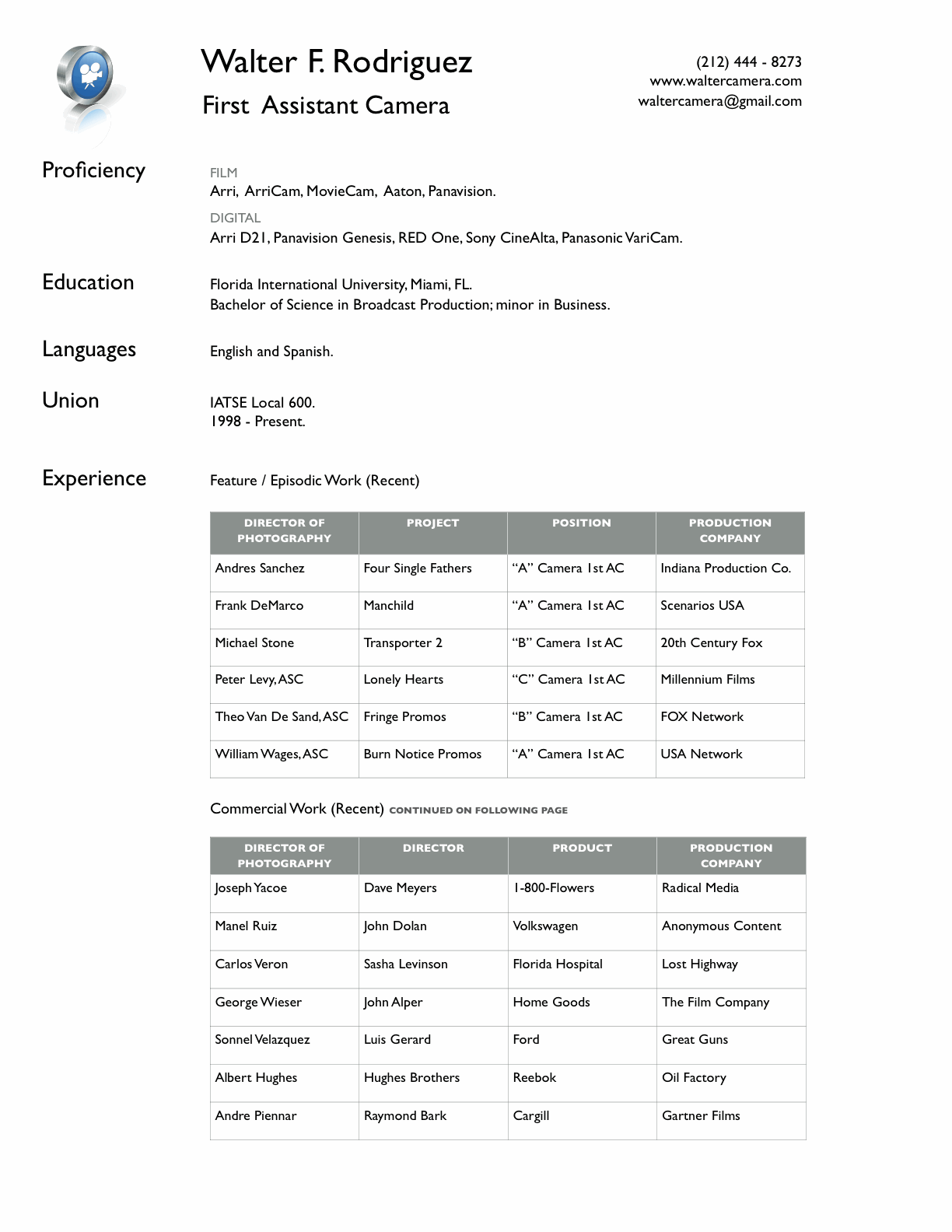
The applicant will state all previous work done, and also their education and a few personal details.
CV & covering letter
This will often go alongside the application, and will tell the employer a lot more about yourself. Things to be included will be your aspirations, why you want to work for the company, past experiences etc, you are basically selling yourself. Your CV will contain all your previous work and education, much of which will of already been covered on your application.Portfolio
Your portfolio is a large collection of all your work. For a filmmaker, this will often be a showreel of all your work and footage, for a photographer and collection of photos and so on and so forth. Your portfolio can be shown in many ways, a hard copy on a disk of all your footage, a book filled with your photos, a website showcasing all of your work etc. A portfolio is essential within the creative media sector, they need to be able to see what you can do and can produce, not just a list of companies you've worked with before and references.Wednesday, 27 May 2015
Production Diary for Digital Graphics Live Brief
Research into already made film festival posters
I begun by researching other film festival posters. I looked at and analysed their designs to help me think of designs for my own poster.


I begun by researching other film festival posters. I looked at and analysed their designs to help me think of designs for my own poster.
http://adweek.blogs.com/.a/6a00d8341c51c053ef011570a6caf0970b-450wi
I really like this poster which is for the Seattle International Film Festival. The slogan of 'find the unexpected' fits well with the images used. The turquoise background is an appealing colour, and it's not too bright as to distract from the content of the poster however it is still eye catching. By showing a large squid/octopus, something not often seen, which fits with the slogan of 'find the unexpected'. I think this is implying mystery and excitement to be found at the festival. The way the octopus is holding lots of objects implies the variety of films at the festival and lets anyone looking at the poster know this isn't just a sea themed film festival. The balloons held in one tentacle could imply there a films for children, the magnifying glass could represent mystery or detective films, the building thats been ripped from the ground could imply apocalyptic type films; so to reiterate the poster shows the variety available. Also shown is the dates the festival is on for, this could be improved by adding a year for archival purposes and the location for the festival.
http://weandthecolor.com/wp-content/uploads/2013/02/27th-Cinema-Jove-Film-Festival-Poster-Design-by-Casmic-Lab.jpg
Initial poster designs
I decided to use Photoshop to design my posters.

This was my first design but I felt it attracted a more childish audience.

I created this poster by getting the background image of Google images and opening it in photoshop. I then selected the text button and wrote Tees Fuse Film Fest. I chose to use bold red text as it stood out against the background and would be eye catching to someone walking past the poster. I changed the width of some of the words so they were all the same length as this looks better. I chose to keep the poster quite simple as it gives the poster a mysterious feel which could encourage people to come and see what its all about.
If I was to do this again I would ask the client more questions to find out exactly what they are looking for in the poster.
Wednesday, 6 May 2015
Factual Programming Theory
Concepts impacting on the production of factual programming
Accuracy:
Accuracy is ensuring everything is correct. Accuracy is necessary in factual programming; the audience must completely trust and believe what you say. This is of course relevant most prominently with news programs where all facts are supposed to be 100% true, however even programs such as Location, Location, Location will still be relied on to provide accurate information in the form of house prices and anything else featured on the program.
Keeping things accurate will ensure viewers continuously return to your programme as they will believe in what you say and stay loyal. Of course not everything said on a piece of factual programming will always be accurate, as something such as an eye witness interview on a news report will not of been fact checked and could contain exaggerated or untrue statements.
Keeping things accurate will ensure viewers continuously return to your programme as they will believe in what you say and stay loyal. Of course not everything said on a piece of factual programming will always be accurate, as something such as an eye witness interview on a news report will not of been fact checked and could contain exaggerated or untrue statements.
Balance:
This means ensuring that a piece of factual programming involving a discussion must ensure that both sides of the story are discussed fairly and correctly. Bias cannot be shown, as this is unprofessional and could upset certain viewers, causing complaints and a decline in viewing ratings. It is also important to ensure certain certain opinions and facts aren't glorified over others as this could be providing the audience with false information or forcing certain beliefs onto them.
A break of balance may be considered acceptable if a program, for example discussing alcohol and its pros and cons, stated all opinions in a factual and accurate manner throughout was to then reach the conclusion at the end that alcohol poses a negative effect on the body. As long as this thought is backed up with an adequate amount of evidence and knowledge this should not cause any viewers to be offended.
Impartiality:
This means ensuring that a piece of factual programming involving a discussion must ensure that both sides of the story are discussed fairly and correctly. Bias cannot be shown, as this is unprofessional and could upset certain viewers, causing complaints and a decline in viewing ratings. It is also important to ensure certain certain opinions and facts aren't glorified over others as this could be providing the audience with false information or forcing certain beliefs onto them.
A break of balance may be considered acceptable if a program, for example discussing alcohol and its pros and cons, stated all opinions in a factual and accurate manner throughout was to then reach the conclusion at the end that alcohol poses a negative effect on the body. As long as this thought is backed up with an adequate amount of evidence and knowledge this should not cause any viewers to be offended.
Objectivity:
This means ensuring that a piece of factual programming involving a discussion must ensure that both sides of the story are discussed fairly and correctly. Bias cannot be shown, as this is unprofessional and could upset certain viewers, causing complaints and a decline in viewing ratings. It is also important to ensure certain certain opinions and facts aren't glorified over others as this could be providing the audience with false information or forcing certain beliefs onto them.
A break of balance may be considered acceptable if a program, for example discussing alcohol and its pros and cons, stated all opinions in a factual and accurate manner throughout was to then reach the conclusion at the end that alcohol poses a negative effect on the body. As long as this thought is backed up with an adequate amount of evidence and knowledge this should not cause any viewers to be offended.
Subjectivity:
This is the opposite to objectivity, and is often avoided during most pieces of factual television programming. Being subjective to certain points and arguments can prevent accuracy and will cause bias, however this is sometimes a technique adopted when a programme is trying to manipulate the audience towards a side of an argument. This is acceptable only if whoever is being subjective clearly states that they are doing so to avoid complaints against a certain television channel or station.
Opinion:
Opinions are often used in factual programming to show what the public think about certain matters. When doing so, it is important to show as wide a range of thoughts and feelings as possible, as if all of what is said seems to be geared towards one side of discussion it will make the whole show appear as biassed, and possibly even the whole television station.
Bias:
This means ensuring that a piece of factual programming involving a discussion must ensure that both sides of the story are discussed fairly and correctly. Bias cannot be shown, as this is unprofessional and could upset certain viewers, causing complaints and a decline in viewing ratings. It is also important to ensure certain certain opinions and facts aren't glorified over others as this could be providing the audience with false information or forcing certain beliefs onto them.
A break of balance may be considered acceptable if a program, for example discussing alcohol and its pros and cons, stated all opinions in a factual and accurate manner throughout was to then reach the conclusion at the end that alcohol poses a negative effect on the body. As long as this thought is backed up with an adequate amount of evidence and knowledge this should not cause any viewers to be offended.
Access:
It is important to ensure all permission is granted for anything included in factual programming; this extends to locations used, people filmed, quotes stated and so on. Also necessary is ensuring you have all access to the resources needed for the programme so you are supplied with all information that may be needed.
The codes and conventions of factual television production
Studio news readers:
There is a strict dress code that applies to studio news readers; very formal attire must be worn and the presenters are to be presented in a professional and neat way from their makeup to their hair to their mannerisms. The news readers will always use a direct mode of address to connect with the viewer, and will speak in a clear tone of voice to be understood by all. They will always be based within a studio, sat at a desk.
Field reporters:
As a news reporter who goes out and reports at the location being discussed, there is a dress code however this is less strict than the one that applies to studio news readers. Depending on the location that they are filming in, their clothes will change yet will still keep an air of formality around them. Often, field reporters appear live on air so must keep highly professional. An indirect mode of address can be used here to draw the readers attention to whatever is being discussed. The field reporter will back up certain things stated by the studio news readers, and may also have an eye witness stood with them to interview. Studio links will be used to correspond between both the studio news reader and the field reporters.
Interviewing:
Interviewing gains the viewer a greater understanding of what is being discussed. By asking somebody questions this backs up anything that has been said by the news reader and acts as further reinforcement for any points that have been made by the reporter. Interviewing also offers a more informal approach to the news, as it features people that the viewers can relate with. With documentaries, an interview could often make up the foundation of the documentary.
Experts and witnesses:
This again will act as reinforcement to what the news reader is saying. An expert opinion can give stats, facts and figures and give an air of professionalism to a discussion. By speaking to an expert, the story instantly becomes more believable and trustworthy, as often a news reader can seem pretentious by constantly talking about all these different things that they couldn't possibly know as much about as they are inferring they do.
A witness provides the same purpose as an expert, as they are basically an expert on whatever it is they have seen to then discuss. However, a witness' account could become mixed up and exaggerated without the witness themselves realise as they may have been excited or nerved by what it is they have seen.
Report structure:
This is the prioritising of certain reports, ensuring that important updates will be spoken of first to ensure the audience is updated as soon as possible. This technique also draws an audience in, if the news comes on after a program they have just been watching and a particularly interesting story comes on, people will be more likely to engage in the program and watch it. The less important and interesting stories are saved till the end of the program.
The codes and conventions of documentary:
Documentary formats:
- Poetic documentaries
First came about in the 1920s and appeared as an alternative to the more traditional types of documentary films that were favoured. The use of cut aways showing nature, environment, landscapes and objects were incorporated into the already existing footage to carry the story and develop it, whilst also creating a more visually interesting piece of film. Softer sounds and music such as piano instrumentals would also accompany the documentaries to add a further dimension to the piece of film.
- Expository
- Observational
- Participatory
This differs from the standard professional TV program or documentary as it is planned and made by a group or community and is often made to address certain issues they want to make the public aware of. This allows individuals to represent their own thoughts and feelings on certain issues, and this style of film will always have a very specific audience in mind.
- Reflexive
This is quite an abstract style of documentary film making, and shows the viewer all the problems they have to overcome as film makers, showing the difficulty and issues they overcome. These styles of documentary have very little editing in them to keep the film truthful and to keep an air of realism.
Realism:
This is where the film contains only real action, nothing is staged or scripted and all action featured is completely natural. These are often accounts of certain people or events, as this is where realism is most readily available. This often makes a really hard hitting piece of film.
Dramatisation:
This is where a script has been changed and edited in a manner to make it more interesting and exciting to the viewer, and is favoured by news programs in order to make everything more interesting. Words such as 'breaking news' and 'exclusive' will be used to entice the viewer and make them pay more attention to what is being said.
Narrativasation:
This is where a story, fact, or situation that is often considered difficult to understand is given a straight forward structure and a narrative to carry and explain the story, making it easier to understand by the masses. The narrator will go into what is being spoken about in depth to make it clear to the viewer.
Thursday, 26 March 2015
Regulatory Bodies
Regulatory Bodies withing the Creative Media Sector
Due to the nature and way in which we consume media nowadays, it is more important than ever to ensure the public who are doing the consuming are protected. With thousands of films and adverts being watched every day and thousands of newspapers and articles being read, people need to be assured that what they are consuming is truthful, accurate and legally obtained, it is the duties of the regulatory bodies to ensure that as far as possible the public will not be harmed or offended by anything.
By regulating media,complaints and investigations are avoided which can potentially save someones job, or even a companies license. However, due to the ever changing and differing idea of what is considered tasteful and decent, not everything can please everyone; which is why Regulatory Bodies are also in place, in order to deal with complaints and sort the problem out as long as they feel the said piece of media is in breach. By doing this, the public is kept happy and will keep paying for and enjoying media services.
BBFC
The BBFC, or The British Board of Film Classification, is responsible for regulating and classifying films in the United Kingdom. The organisation was set up in 1912, founded by the film industry as they decided they would rather take charge of film classifications as opposed to the national or local government doing it. The BBFC has never accepted any funding from the government to ensure it's independence and instead is funded by the film industry.
The Video Recordings Act 2010 caused the BBFC to have a statutory requirement to provide classifications to all videos and DVDs, and sometimes even video games. Local authorities hold the right to decide what films are shown in local cinemas, but the large majority of the time they choose to follow the advice of the BBFC. The current ratings for films are:
- U
This means universal; the film is suitable for all ages however occasional scenes may be unsuitable for children under 4.
- PG
This means parental guidance; all ages are allowed to see this film however certain scenes could be considered unsuitable for children under the age of 8 to see alone.
- 12A
This rating only applies in cinemas and was introduced in 2002. Children under the age of 12 are admitted into a 12A rated film only if they are accompanied by someone aged at least 18 or older and they must stay with the child throughout the entire movie. Due to the content of a 12A film containing mature themes such as soft drug use/reference, milder swear words, discrimination and moderate references to sex and violence, in general it is not encouraged that a child younger than 12 should see the film.
- 12
Since 2002, this rating has only applied to films watched at home, whether this be bought on DVD or rented. If a film is given a rating of 12A in the cinema, the VHS or DVD version is given a certificate of 12 as long as nothing extra has been added to the home media version causing the film to require a higher rating. No one younger than 12 can buy or rent anything that has recieved a BBFC clasification of 12 because they could include infrequent drug use and swearing, short showings of nudity, sexual activity (as long as it's discreet) and mild violence, however if a parent allows their child to view a film in their own home this is at their own discretion.
- 15
Only if you are 15 years of age or older can you be admitted to a film rated 15 at the cinema. Only if you are 15 or older can you buy or rent a piece of media with the BBFC rating of 15 and nobody under the age of 15 should see this film. These films are given this rating due to them having adult themes, hard drug use, stronger use of swearing, stronger violence and reference to sex and mild sex scenes.
- 18
Adults aged 18 or over are admitted into this film, and nobody under the age of 18 can buy or rent a piece of media with the BBFC rating of 18. There is no limitation to the swearing used, hard drugs are often allowed along with strong showings of violence, sex references and stronger sex scenes. A scene containing real sexual activity is permitted as long as it is justified by the context of the film.
- R18
This means restricted 18 and films with this rating can only be shown in certain licensed cinemas or licensed shops and only to anyone ages 18 or over. The material featured in these films possess material the BBFC deems inappropriate for its rating of 18 due to even strong violence and sex. Despite this being the strongest rating allowed, more cuts are made to films in this category than any other.
Since its founding in 1912, 11 films have been completely banned in the United Kingdom by the BBFC. The Human Centipede 2 was initially denied a UK classification, and therefore its right to be distributed, however after making 32 cuts to the film (2 minutes and 37 seconds of footage) the BBFC begrudgingly awared it a rating of 18. The cuts needed to be made due to the BBFC deciding that some scenes were "relating to sexual violence, graphic gore and the possibility of breach of the law relating to obscenity".
OFCOM
Television, Radio and Telecommunications Office for Communication, or Ofcom, is responsible for regulating communications. This includes the sectors of both TV and Radio, mobile phones, fixed line telecommunications, postal services and also the airwaves where wireless devices operate. The Communications Act 2003 states exactly what Ofcom's rules and duties are. Fees from industry to regulate broadcasting and any communications network funds Ofcom, along with financial aid from the Gorvernment.
Their legal duties are:
- To ensure that the United Kingdom has as wide a range as possible of electronic communication services, such as broadband
- To ensure as wide a range as possible of good quality TV and radio is provided to appeal to people of all ages, tastes and interests
- To ensure that anyone watching TV or radio is protected from any material deemed harmful or offensive
- To ensure that a wide range of organisations provide the TV and radio services
- To ensure the most effective use of the radio spectrum
Ofcom only regulates programs that have already been broadcast. Unlike the way the BBFC regulates films and orders any cuts before the films are seen by the public, Ofcom handles public complaints by assessing them against the broadcasting code to see if the said program was in breach of the code. If a broadcaster is found to of either seriously breached this code or to of done so repeatedly, Ofcom has the legal power to impose punishments; these range from a large fine to taking away their broadcasting license.
The broadcasting code (can be found here) was created through extensive research into the public's opinions on what is and isn't acceptable on TV, and it covers the regulations in place for programs, sponsorship, fairness, product placement and privacy. The codes aim is to ensure all listeners and viewers are protected from content considered harmful and offensive as long as the audience receives information letting them know this and also as long as the content is editorially justified. Impartiality and accuracy, sponsorship and product placement, fairness and privacy as well as harm and offence are all covered in the code. When a complaint is made, it is assessed against the code and if the program is found to of broken any rules specified in the code a recording of the breach will be made and Ofcom may be required to make a further decision such as a revoking of a license or a fine, for example in the Sachsgate debacle, the BBC was fined £150,000. Ofcom found that BBC2 had broadcast "explicit, intimate and confidential information" regarding Sachs' granddaughter, without her consent. Ofcom went on to say "This not only unwarrantably and seriously infringed their privacy but was also gratuitously offensive, humiliating and demeaning". £70,000 of the fine was for breaching the broadcasting code on standards and £80,000 for the unwarranted infringement of both Sachs and his granddaughter's privacy.
IPSO
IPSO, or the Independent Press Standards Organisation, replaced the former regulatory body The Press Complaints Commission (PCC) which was closed on the 8th September 2014. It is an independent organisation which regulates the magazine and newspaper industry. As well as striving to keep the quality of journalism in the UK as high as possible, they also support any members of the public by setting right any complaints made stating that there has been a breach in the Editors' Code of Practice. The full Editors' Code of Practice can be found here. By protecting individuals rights, and ensuring all conduct is at a professional standard, IPSO help to keep "freedom of expression for the press".
All of the services offered by IPSO are free of charge and anybody can make a complaint through their website. All recent rulings made by IPSO can be found here.
ASA
The ASA, or Advertising Standards Authority, exists in the United Kingdom as a self regulating organisation. The ASA has no legal enforcement rates, however it acts to "regulate the content of advertisements, sales promotions and direct marketing in the UK". To do this, the ASA investigates any complaints made by the public about any advertisements, product promotions or direct marketing by seeing if the said advertisement complies with its code (found here). The code covers an extensive list, ranging from things such as harm and offence, to the more obscure such as pornography and electronic cigarettes.
Here is an example of the ASA banning an ad featured on the infamous Page 3 of The Daily Star, ASA stated that the ad, offering a lucky winner a visit from 2 models to his workplace, was “sexist, offensive and socially irresponsible” and did not comply with the code.
Issues associated with regulation; consumer choice, freedom of information and censorship
There are a lot of issues associated with regulation, the main one being that it is impossible to please everyone. Whilst regulating and/or censoring a news broadcast showing a violent attack, some people will agree they are being protected from harmful content, others will feel the this stands in the way of their right to information. Decisions will need to be made on the grounds of whether it is in the interest of the majority of the public.A joke featured on a TV show might be found hilarious by someone, yet absolutely outrageous to someone else and they therefore would want it removing from broadcast, however the person who enjoyed it would be equally annoyed, so Ofcom would need to make a decision on whether enough people were complaining and if the offending joke went against its code.
Sometimes, regulation is taken too far such as in China, where they sensor and have full control over everything said on social media. They believe that through this, people will self regulate what they post.
The Freedom of Information Act 2000 was put in place to provide the public with access to certain information kept by publicly owned authorities. The act enforces this in 2 different ways; by ensuring that authorities that are obliged to do so publish certain information regarding their activities,
Friday, 27 February 2015
Documentary - Production Diary
Generating ideas
I begun this assignment by brainstorming ideas. I made a list of things i'm interested in, which included things like food, pets and Pokémon. I toyed with the idea of doing a documentary about cats vs. dogs, made up of interviews from people asking them about their pets and footage filmed of their pets being cute or funny. I'm going to keep this as my backup plan as I think it could be quite uninteresting if not done well.
Instead I am wanting to make a documentary about my friend Vicky. She's not remarkably interesting, but I feel it would be interesting to have an insight into an 18 year old girls life. She has her own house and funds herself through her job at a fruit shop in Stokesley. It would be interesting to see how much of herself she reveals to me and the camera. However, I am unsure if Vicky will go along with this as she would probably find this idea weird and stupid so I will have to convince her and ensure I have her permission before I begin filming.
However, as I had a bit more thought into what my documentary could be about, I decided to make it about the culture of weed in todays society, particularly with young people. I chose this idea as I feel it could be interesting, however I also want it to be informative and whilst stating the negative effects of smoking cannabis such as causing psychosis, paranoia and anxiety I also want to show how it is embedded within youth culture and can have positive effects such as bringing friends together and making people laugh and be happy. I also want to show how despite the common belief that weed is not addictive, I want to also show how many people become dependent on it as a social lubricant and almost feel unable to function normally without it.
I begun this assignment by brainstorming ideas. I made a list of things i'm interested in, which included things like food, pets and Pokémon. I toyed with the idea of doing a documentary about cats vs. dogs, made up of interviews from people asking them about their pets and footage filmed of their pets being cute or funny. I'm going to keep this as my backup plan as I think it could be quite uninteresting if not done well.
Instead I am wanting to make a documentary about my friend Vicky. She's not remarkably interesting, but I feel it would be interesting to have an insight into an 18 year old girls life. She has her own house and funds herself through her job at a fruit shop in Stokesley. It would be interesting to see how much of herself she reveals to me and the camera. However, I am unsure if Vicky will go along with this as she would probably find this idea weird and stupid so I will have to convince her and ensure I have her permission before I begin filming.
However, as I had a bit more thought into what my documentary could be about, I decided to make it about the culture of weed in todays society, particularly with young people. I chose this idea as I feel it could be interesting, however I also want it to be informative and whilst stating the negative effects of smoking cannabis such as causing psychosis, paranoia and anxiety I also want to show how it is embedded within youth culture and can have positive effects such as bringing friends together and making people laugh and be happy. I also want to show how despite the common belief that weed is not addictive, I want to also show how many people become dependent on it as a social lubricant and almost feel unable to function normally without it.
Date
|
Process
|
25/2/2015
|
Planning
and initial research – collate research into single document/folder +
create schedule (2/2.5 hours)
|
26/2/2015
|
Complete
all prep for Task One (2/2.5 Hours)
|
Week
One Homework
|
Location
recces, finding and conducting primary research
interviews with people who may appear in the documentary. Write Synopsis for
show (3 Hours)
|
3/3/2015
|
Complete
writing up of Task One – Start Pre-Production for Shoot: Risk
Assessment, Contacts List, Equipment List and Booking
Gather Media resources (public domain
clips/photos/music) (2/2.5 Hours)
|
4/3/2015
|
Complete
Show Bibles – Genre Chosen (with explanation of
why); Development of your idea (and the research that led to this); Synopsis;
Research for programme (primary and secondary); Legal
Considerations; Pre-Production Planning (Script for narration, location
photos, shooting schedule, equipment lists and booking form, consent forms
from person interviewed, risk assessments for each shoot) (2/2.5 Hours)
|
Week
Two Homework
|
Shoot
interviews and other footage (4 – 5 Hours)
|
11/3/2015
|
Post
Production (Picture Edit) (2/2.5 Hours) +
additional homework time
|
12/3/2015
|
Post
Production (Audio) (2/2.5 hours) + additional homework time
|
Week
Two Homework
|
Complete
Task Three (Production Diary) (2+ hours)
|
Now I've created my plan, I will go on to create my show bible. I wrote a synopsis of my documentary, including the concept of it and what it will include, who I will interview and the kind of questions I will ask them. My next step is to conduct some primary research through brief interviews with people asking them about their opinion on cannabis in general, whether they use it, how often, what they think of it and so on and so forth.
Research
I begun by asking some people I knew if they would want to be involved in the film to ensure I had people to feature in my documentary. I then begum conducting primary research into what people think about the subject in general. I filmed my friends Cameron and Penny, asking them these questions. They both agreed to be filmed for my research, and I kept a note of their names in case I decide to use this footage in my film in which case they will need to sign a clearance. I also interviewed John using the voice recorder on my phone (he did not want to be filmed, but agreed I could use a voice interview as research) asking his opinion, which was helpful as it contrasted with Penny and Cameron’s opinions.
John's views that cannabis use is acceptable as long as people don't overdo it is an interesting view compared with Cameron, who felt cannabis is completely unacceptable and said he will never do it in his life, and Penny who said she can see why some people would want to use it and how they can enjoy it but feels she will never use it herself. All 3 of these people were between the ages of 16 and 19, so this research shows that even people within a similar demographic have massively differing opinions on the subject. It is a highly controversial matter, so I'm hoping by gaining many different opinions my documentary will be thought provoking and interesting.
I then went to one of the locations I want to use for my documentary, and took a few quick recordings on my phone as tests to see how it would work in my film. I also took a few shots of some of the people I would like to appear in my film. I chose to film them whilst they were just sat doing their normal thing, listening to their conversations and watching how they acted whilst they were smoking cannabis. Through listening back through these recordings, I will be able to think of techniques to use and questions to ask when 'interviewing' them, to try and make it more natural and conversation like. I want it to be a truthful and real insight, and hopefully this will help me achieve that.
I then went on to conduct secondary research, in the form of looking on the internet at different articles, I watched the TV program ‘Drugs Live: Cannabis on Trial’ which was shown on channel 4 (http://www.channel4.com/info/press/programme-information/drugs-live-cannabis). From this I found a lot of vital information, such as the scientific effects it has on your brain, such as the certain parts it activates, and how extensive use can lead to psychosis and even the development of schizophrenia or other related illnesses. I also read this article, http://www.drugscience.org.uk/blog/2013/10/24/think-cannabis-harmless-no-does-anyone-what-about-propagating-drug-hysteria-harmless/ which really interestingly goes into cannabis and it’s effects in depth, whilst also trying to diminish the way in which media propagates drug hysteria, and how that equally has a harmful effect on people. All of this is handy information I can use in my documentary, and from the article I printed it out and went through it highlighting any bits I found particularly relevant and interesting to my documentary, and that I could use in the script for voice over.
From the research I then went on to create the show bible. The show bible included a synopsis for my documentary, a concept, specified the target audience, research, legal considerations, risk assessment and the script for the narration of my documentary.
I then went on to shoot the footage. I already had some footage I had filmed using my phone as part of my research, which would be useable as b roll. I did a couple of interviews with my friends asking them questions about cannabis. I wanted it to feel natural when watched and as though it was just a conversation. I also then went on to interview my Aunty asking her similar quesitons, which I think will be interesting as she is an adult and will have different thoughts on it too children.
I wanted to conduct an interview with Catherine Mulligan, who works for the NHS with the Early Intervention in Psychosis team. She would have a really good insight into the subject of cannabis and its impact on your health and particularly mental health. Her opinion would also contrast with that of all the people I have already interviewed, who were all quite pro cannabis. However at the last minute she said she didn't want to be interviewed, so instead I am going to write out a script and talk over some of the footage I have taken. If I also use clips of found footage, hopefully this will still work.
Though this set me back a bit, it was lucky I had already conducted a lot of research and had some prior knowledge in the subject area in order to write this voice over script. I plan to use a zoom mic to record my voice over.
I found some found footage on www.archive.org and used that in my film. I then went on to edit my film using Adobe Premiere Pro. The main problem I encountered when editing was that some of my footage had bad audio, it was distorted and music could be heard playing in the background. I tidied this up as much as I could using Adobe Audition.
Once I'd exported I uploaded the documentary to vimeo. Overall I feel that extra time to complete the film would have helped. Despite thorough planning and sticking to a tight schedule, the time frame given did not allow much contingency time in the event of something going wrong; in my case the person I wanted to interview changing their mind and some of the footage I shot being of poor quality. Better time management on my behalf and planning in the case of my footage being of a poor and nowhere near professional quality.
Research
I begun by asking some people I knew if they would want to be involved in the film to ensure I had people to feature in my documentary. I then begum conducting primary research into what people think about the subject in general. I filmed my friends Cameron and Penny, asking them these questions. They both agreed to be filmed for my research, and I kept a note of their names in case I decide to use this footage in my film in which case they will need to sign a clearance. I also interviewed John using the voice recorder on my phone (he did not want to be filmed, but agreed I could use a voice interview as research) asking his opinion, which was helpful as it contrasted with Penny and Cameron’s opinions.
John's voice interview
Penny and Cameron's interview
John's views that cannabis use is acceptable as long as people don't overdo it is an interesting view compared with Cameron, who felt cannabis is completely unacceptable and said he will never do it in his life, and Penny who said she can see why some people would want to use it and how they can enjoy it but feels she will never use it herself. All 3 of these people were between the ages of 16 and 19, so this research shows that even people within a similar demographic have massively differing opinions on the subject. It is a highly controversial matter, so I'm hoping by gaining many different opinions my documentary will be thought provoking and interesting.
I then went to one of the locations I want to use for my documentary, and took a few quick recordings on my phone as tests to see how it would work in my film. I also took a few shots of some of the people I would like to appear in my film. I chose to film them whilst they were just sat doing their normal thing, listening to their conversations and watching how they acted whilst they were smoking cannabis. Through listening back through these recordings, I will be able to think of techniques to use and questions to ask when 'interviewing' them, to try and make it more natural and conversation like. I want it to be a truthful and real insight, and hopefully this will help me achieve that.
I then went on to conduct secondary research, in the form of looking on the internet at different articles, I watched the TV program ‘Drugs Live: Cannabis on Trial’ which was shown on channel 4 (http://www.channel4.com/info/press/programme-information/drugs-live-cannabis). From this I found a lot of vital information, such as the scientific effects it has on your brain, such as the certain parts it activates, and how extensive use can lead to psychosis and even the development of schizophrenia or other related illnesses. I also read this article, http://www.drugscience.org.uk/blog/2013/10/24/think-cannabis-harmless-no-does-anyone-what-about-propagating-drug-hysteria-harmless/ which really interestingly goes into cannabis and it’s effects in depth, whilst also trying to diminish the way in which media propagates drug hysteria, and how that equally has a harmful effect on people. All of this is handy information I can use in my documentary, and from the article I printed it out and went through it highlighting any bits I found particularly relevant and interesting to my documentary, and that I could use in the script for voice over.
From the research I then went on to create the show bible. The show bible included a synopsis for my documentary, a concept, specified the target audience, research, legal considerations, risk assessment and the script for the narration of my documentary.
I then went on to shoot the footage. I already had some footage I had filmed using my phone as part of my research, which would be useable as b roll. I did a couple of interviews with my friends asking them questions about cannabis. I wanted it to feel natural when watched and as though it was just a conversation. I also then went on to interview my Aunty asking her similar quesitons, which I think will be interesting as she is an adult and will have different thoughts on it too children.
I wanted to conduct an interview with Catherine Mulligan, who works for the NHS with the Early Intervention in Psychosis team. She would have a really good insight into the subject of cannabis and its impact on your health and particularly mental health. Her opinion would also contrast with that of all the people I have already interviewed, who were all quite pro cannabis. However at the last minute she said she didn't want to be interviewed, so instead I am going to write out a script and talk over some of the footage I have taken. If I also use clips of found footage, hopefully this will still work.
Though this set me back a bit, it was lucky I had already conducted a lot of research and had some prior knowledge in the subject area in order to write this voice over script. I plan to use a zoom mic to record my voice over.
I found some found footage on www.archive.org and used that in my film. I then went on to edit my film using Adobe Premiere Pro. The main problem I encountered when editing was that some of my footage had bad audio, it was distorted and music could be heard playing in the background. I tidied this up as much as I could using Adobe Audition.
Once I'd exported I uploaded the documentary to vimeo. Overall I feel that extra time to complete the film would have helped. Despite thorough planning and sticking to a tight schedule, the time frame given did not allow much contingency time in the event of something going wrong; in my case the person I wanted to interview changing their mind and some of the footage I shot being of poor quality. Better time management on my behalf and planning in the case of my footage being of a poor and nowhere near professional quality.
Subscribe to:
Comments (Atom)